The immover observatory

Property Prices in Cahors2026 property valuation

Updated: January 2026 Sources: DVF · Notaires de France · Immover January 2026 · DVF, Notaires de France, Immover
In brief

The average price per m² in Cahors is 1 590 €/m² for an apartment, within a range of 1,3 to 1,8 k€ per m², based on actual notarised (DVF) sales. Over the period, the market rose 17 % over 5 years and fell 1,7 % over the last 12 months, with about 150 transactions per year.

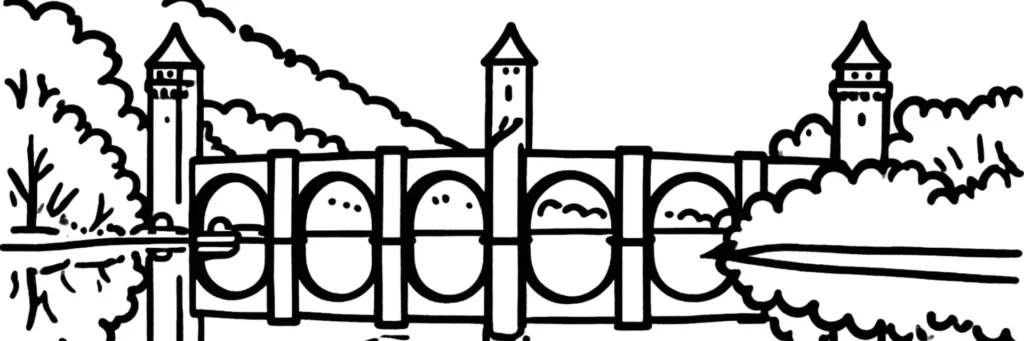
Line illustration of Cahors: the pont Valentré and its three towers above the Lot

Cahors, prefecture town of the Lot department, in the loop of the river.

Property Prices in Cahors

The 2026 figures· Indicative data
1 590€/m²

Apartments in Cahors sell at an average price of around 1 590 €/m², based on transactions actually recorded (DVF data, the French notarised sales database). Prices range from about 1 331 €/m² in Cabessut to 1 658 €/m² in Saint-Cirice, a 25 % gap, and five of the seven districts lie within 5,5 % of each other. Houses, at 1 760 €/m², cost 11 % more than apartments. The market records 150 apartment sales a year.

T2 (2 rooms)1 652 €
Studio, T1 (1 room)1 642 €
Apartment (average)1 590 €
T3 (3 rooms)1 562 €
T4 and larger (4+ rooms)1 512 €
12-month change
-1,7 %
5-year change
+17 %
Transactions / year
150
Price range /m²
1,3 to 1,8 k€

Prices from the DVF file (Demandes de valeurs foncières, published by the DGFiP), transactions actually recorded at the notary at municipality level. Cross-referenced with the Notaires de France - INSEE indices. Learn more about our methodology.

Market trend in Cahors

+17 % over 5 years
Change in the average price per m² in Cahors, from 1 360 € in 2021 to 1 590 € in 2026. 1 650 € 1 500 € 1 350 € 1 200 € 1 360 € 1 483 € 1 613 € 1 603 € 1 576 € 1 590 € 2021 2022 2023 2024 2025 2026
Change in the average price per m² in Cahors, 2021 to 2026. Source: DVF.

After 1 360 €/m² in 2021, the average price in Cahors reaches 1 590 €/m² in 2026, around +17 % over the period.

Cahors districts on the move

12-month change

Change in the average price per m² over twelve months, district by district, based on the most recent DVF sales.

Rising

Saint-Cirice1 658 €/m²+13,1 %
Cabessut1 331 €/m²+9,0 %
Vieux Cahors1 603 €/m²+6,2 %
La Croix-de-Fer1 633 €/m²+4,5 %

Stable

Easing

Saint-Georges1 415 €/m²-2,6 %
La Gare1 620 €/m²-7,6 %
Fénelon1 571 €/m²-9,0 %

All the districts of Cahors

Price per m² by district

The average price per m² for an apartment in each of the seven Cahors districts covered by Immover, ranked from the most expensive to the most affordable.

Market trends and analysis for Cahors

The Cahors market is rising over time. The average apartment price went from 1 360 €/m² in 2021 to 1 590 in 2026, around 17 % over the period, and it is levelling off over the last twelve months, at -1,7 %. What is falling is the number of sales: the municipality recorded 197 apartment sales in 2021 and 208 in 2022, then between 145 and 155 a year. These are two different series: a less active market is not a falling market.

All seven districts have risen over five years, by 8 to 23 %. Saint-Cirice leads with 23 %, ahead of La Croix-de-Fer, 19 %, Fénelon, 18 %, Vieux Cahors, 16 %, La Gare, 15 %, Saint-Georges, 10 %, and Cabessut, 8 %. Over twelve months, movements range from -9 % in Fénelon to +13,1 % in Saint-Cirice: they are based on 7 to 41 sales a year depending on the district and need confirmation. Immover covers seven districts, 99 % of the apartment sales in the municipality. Terre-Rouge, a priority urban neighbourhood on the right bank, records almost no apartment sales and no price can be calculated there; the town council and Lot Habitat, the department's social housing landlord, are running a renovation programme there. To the north, the hillsides of Regourd and Les Tuileries record only a handful of sales in five years.

Cahors against the major cities

average €/m²

Cahors compared with the major French cities, on the average price per m² for an apartment.

CityTierPrice /m²Gap
Cahors1 590 €ref.
Paris10 345 €+551 %
Lyon4 532 €+185 %
Reims2 731 €+72 %
Marseille3 404 €+114 %
Montpellier3 434 €+116 %

The history of Cahors

Cahors is the prefecture town of the Lot department, built in an almost closed loop of the river, which surrounds the old town on three sides and links it to the plateau only through an isthmus, to the north. The town grew up around a sacred spring, the Divona, « the divine » in Gaulish, today the fontaine des Chartreux. As the Gallo-Roman capital of the Cadurci under the name of Divona Cadurcorum, in the first century it had a bridge, an aqueduct, temples, baths, an amphitheatre and a theatre of about 6 500 seats. Of those baths only one remnant survives, the Arc de Diane, near the station.

Around 650, Bishop Didier, later Saint Didier, had the first cathedral built, together with a town wall whose line matches today's boulevard Gambetta. The town was sacked by the Saracens in 732. In 1119, Pope Calixtus II consecrated the two main altars of the cathédrale Saint-Étienne. In the thirteenth and fourteenth centuries, the Cahors merchant-bankers made the town's fortune. Jacques Duèze, born in Cahors in 1244, became pope in 1316 under the name of John XXII and in 1331 founded the university of Cahors, which had up to 1 600 students before it merged with that of Toulouse in 1751.

On 17 June 1308, the consul Guillaume de Sabanac laid the first stone of the pont Valentré. In use from 1350, the fortified bridge with three towers was completed in 1378; it was inscribed together with the cathedral on the Unesco World Heritage List in 1998, as part of the Routes of Santiago de Compostela in France. During the Hundred Years' War, the town surrendered to the Englishman John Chandos on 8 January 1362, then swore allegiance to King Charles V on 5 February 1369. In May 1580, Henri de Navarre, the future Henri IV, took the town after three days of street fighting.

The nineteenth century cut the boulevard Gambetta along the line of the old wall, built the station and two new bridges, and raised, to the west and south of the peninsula, a town of straight streets and apartment blocks built for rent. Léon Gambetta was born in Cahors in 1838; the poet Clément Marot had been born there in 1496. After 1965, the town spread onto the terraces of the right bank, such as Terre-Rouge, until then farmland. The municipality has 20 050 inhabitants in 2023, a figure that has been stable for ten years, and 54,4 % of its homes are apartments.
Who buys in Cahors

Cahors sells at 1 590 €/m² for an apartment, an affordable level for a prefecture town. The municipality has 47,9 % owner-occupiers and 50,1 % tenants, including 17,9 % in social housing, and its housing stock is 54,4 % apartments. The buyer profile is that of first-time buyers, public-sector employees drawn by the administrations of the departmental capital, retirees, and investors aiming at the rental market. Three points to know before buying. The first is the narrow spread of prices: five of the seven districts lie between 1 571 and 1 658 €/m², and the historic peninsula costs no more than the residences of the outer districts. The condition of the building, the floor, the lift and parking weigh more than the address. The second concerns the outer districts: in Saint-Cirice as in La Croix-de-Fer, apartment sales are concentrated in a few residences, and the average price describes those buildings more than their surroundings. The third is how to read the trend: the price has gained 17 % over five years and is stable over twelve months, at -1,7 %, while the number of sales is falling. These are two distinct movements.

Frequently asked questions

The average price in Cahors is 1 590 €/m² for an apartment (actual DVF transactions, notarised sales), within a range of 1 261 to 1 837 €/m² depending on the district. Property portals show asking prices, 10 to 20 % above the prices actually recorded.

Saint-Cirice, on the terrace of the right bank, at 1 658 €/m², 4 % above the town-wide average. La Croix-de-Fer follows at 1 633 €/m², then La Gare at 1 620 and Vieux Cahors at 1 603. The gap with the most affordable district, Cabessut, at 1 331 €/m², is 25 %.

No. At 1 603 €/m², the conservation area sells at the town price, 1 % above the town-wide average. The medieval buildings there often have no lift and parking is difficult, which offsets the appeal of the address. Two outer districts, Saint-Cirice and La Croix-de-Fer, are slightly more expensive.

Over five years, yes: the average apartment price rose from 1 360 €/m² in 2021 to 1 590 in 2026, a 17 % increase. Over the last twelve months, it is stable, at -1,7 %. The number of sales, on the other hand, has fallen, from 208 apartment sales in 2022 to around 150 a year since. Fewer transactions do not mean lower prices.

Houses sell at 1 760 €/m², 11 % more than apartments at 1 590 €/m². Houses make up 44,3 % of the homes in the municipality. The land, the view over the valley, the condition of the roof and the energy performance make the difference between two properties.

Terre-Rouge, on the right bank, is the only priority urban neighbourhood in the Lot department. Its housing stock is mostly social housing, and it records almost no apartment sales: no reliable price can be calculated there. Its surroundings are covered by the Cabessut and Saint-Cirice pages.

Value your property in Cahors

Free valuation in under 2 minutes

Value my property

This analysis is published by Immover, an independent observatory founded by . Data sourced from official sources (DVF, INSEE, Notaries of France).

Estimer mon bien